
Views: 185 Author: Site Editor Publish Time: 2025-09-10 Origin: Site


In the realm of electronic circuits, relays are crucial components that enable the control of high-voltage or high-current circuits through low-power signals. Among the diverse relay types available, optocoupler relays and mechanical relays are two widely used options, each with unique characteristics, advantages, and limitations. Understanding the differences between these relay types is essential for engineers, technicians, and hobbyists seeking optimal performance and reliability in their designs. This article explores the distinctions between optocoupler relays and mechanical relays, their applications, operational principles, and frequently asked questions, providing a comprehensive guide for anyone working with modern electronic systems.
An optocoupler relay, also known as a solid-state relay (SSR), is an electronic switching device that uses optical isolation to control a circuit. Its operation is based on the principle of using an LED (light-emitting diode) to emit light, which then activates a photodetector, such as a phototransistor or a photodiode, to switch the output circuit. This optical isolation ensures that the input control signal is electrically separated from the output circuit, significantly reducing the risk of electrical interference, voltage spikes, or short circuits.
One of the defining features of optocoupler relays is their non-mechanical switching mechanism. Unlike mechanical relays that rely on moving parts such as coils, armatures, and contacts, optocoupler relays employ semiconductor devices like thyristors, triacs, or MOSFETs to switch current. This results in faster switching speeds, typically in the microsecond to millisecond range, longer operational lifespans, and silent operation. Furthermore, optocoupler relays are highly resistant to vibration and shock, making them suitable for industrial automation, instrumentation, and high-reliability applications where mechanical wear could compromise performance.
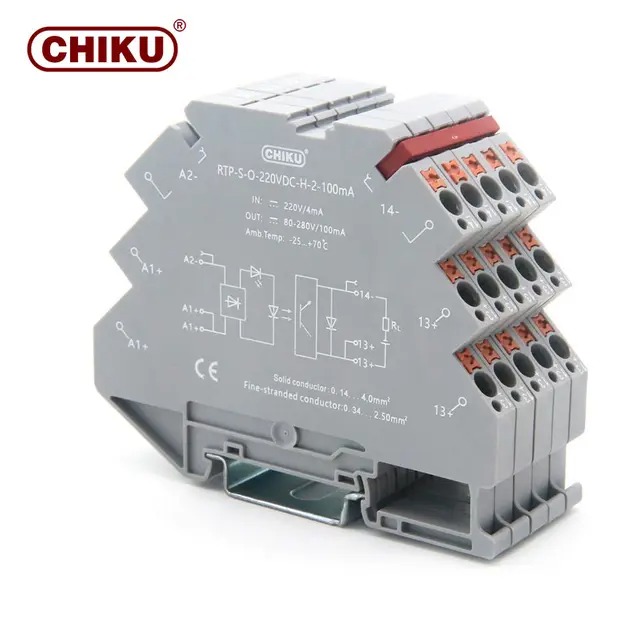
Mechanical relays, often referred to as electromechanical relays, are traditional relay types that utilize a physical moving armature to open or close electrical contacts. When an electrical signal is applied to the relay coil, it generates a magnetic field that moves the armature, thereby completing or breaking the circuit. Mechanical relays are widely recognized for their robust switching capability and ability to handle high currents and voltages.
However, the mechanical nature of these relays introduces certain limitations. Contact wear and arcing over time can reduce operational reliability, and the switching speed is generally slower compared to optocoupler relays. Additionally, mechanical relays produce audible clicking sounds during operation and are more susceptible to mechanical fatigue. Despite these drawbacks, they are still preferred in applications where cost-effectiveness, high load-handling capacity, and simple control circuits are critical.
When comparing optocoupler relays and mechanical relays, several important differences emerge, including isolation method, switching speed, lifespan, and operational noise. The table below summarizes these key distinctions:
| Feature | Optocoupler Relay | Mechanical Relay |
|---|---|---|
| Switching Mechanism | Semiconductor-based (LED + photodetector) | Electromechanical (coil + moving contacts) |
| Isolation | Optical | Magnetic / Physical separation |
| Switching Speed | Microseconds to milliseconds | Milliseconds to tens of milliseconds |
| Lifespan | High (millions of cycles) | Moderate (tens of thousands of cycles) |
| Noise | Silent | Audible clicking |
| Vibration Resistance | High | Moderate |
| Load Handling | Moderate | High |
These differences are critical when selecting the right relay for specific applications. Optocoupler relays excel in high-speed, high-reliability, and low-noise environments, while mechanical relays remain advantageous for high-current or high-voltage switching where cost constraints are significant.
Optocoupler relays are widely utilized in modern electronic circuits and industrial systems due to their silent operation, fast response, and electrical isolation. Common applications include PLC systems, microcontroller-based automation, temperature and process control, and telecommunications equipment. Their ability to switch without physical contact eliminates concerns about arcing or mechanical wear, ensuring consistent performance over long periods.
In addition, optocoupler relays are integral to safety-critical applications. For instance, in medical devices or sensitive laboratory instruments, the optical isolation prevents accidental high-voltage feedback to control circuits, protecting both equipment and users. In industrial automation, they are often used to interface low-voltage digital signals with high-power AC motors or heating elements, providing both isolation and precise control. This versatility highlights the strategic advantage of optocoupler relays in high-reliability systems.
Selecting between an optocoupler relay and a mechanical relay requires careful consideration of the operational environment, required switching speed, load characteristics, and desired lifespan. Engineers must evaluate factors such as current and voltage ratings, switching frequency, thermal performance, and susceptibility to environmental stressors like vibration or moisture.
Optocoupler relays are ideal for high-speed, high-reliability, and low-noise applications. In contrast, mechanical relays are better suited for high-power switching, applications requiring visible contact status, or cost-sensitive designs. By understanding these factors, designers can ensure optimal performance while minimizing maintenance and operational risks.
Q1: Can optocoupler relays handle the same load as mechanical relays?
A1: While optocoupler relays are highly reliable, they typically handle lower current loads compared to heavy-duty mechanical relays. Selecting an appropriate model based on the load is essential.
Q2: Are optocoupler relays completely silent?
A2: Yes, because they have no moving parts, their operation is silent, unlike mechanical relays that produce an audible click during switching.
Q3: Do optocoupler relays have a longer lifespan than mechanical relays?
A3: Generally, yes. Solid-state operation allows optocoupler relays to achieve millions of switching cycles, significantly outlasting mechanical relays.
Q4: What are common failure modes of mechanical relays?
A4: Mechanical relays often fail due to contact wear, arcing, or coil burnout, especially under high-frequency switching conditions.
Q5: Can optocoupler relays be used in AC and DC applications?
A5: Yes, depending on the design, optocoupler relays can switch both AC and DC circuits. However, specifications must be checked to ensure compatibility with the intended voltage and current.
Understanding the differences between optocoupler relays and mechanical relays is essential for making informed decisions in electronic design and industrial automation. Optocoupler relays provide fast, silent, and reliable switching with electrical isolation, making them ideal for precision and safety-critical applications. Mechanical relays remain invaluable for high-load switching, cost-sensitive projects, and situations where visual contact indication is needed. By evaluating operational requirements, switching characteristics, and environmental factors, engineers can select the relay type that delivers optimal performance, longevity, and safety.


