
Views: 126 Author: Site Editor Publish Time: 2025-12-09 Origin: Site


Imagine a world without seamless energy flow. Connectors are vital components that ensure efficient power transfer. They connect everything, from solar panels to industrial machinery. In this post, you'll learn what energy connectors are and their crucial role in modern energy systems. Discover how they enhance efficiency, safety, and integration across various applications.
Energy connectors are devices that link various parts of an energy system, allowing electrical power to flow efficiently and safely between components. They serve as the bridge between energy sources, storage units, and consumption points. Typically, an energy connector consists of two main parts: the plug (male) and the socket (female). These parts fit together to create a secure electrical connection that minimizes resistance and energy loss.
At their core, energy connectors include:
Conductors: Usually made of copper or aluminum, these carry electrical current.
Insulation: Surrounds the conductors to prevent short circuits and protect users from electric shocks.
Contact Points: Where the plug and socket meet, designed to ensure a stable, low-resistance connection.
Locking Mechanisms: Features that secure the connection and prevent accidental disconnections, especially important in environments prone to vibration or movement.
Energy connectors come in various designs to meet different voltage, current, and environmental demands. Some common types include:
DC Connectors: Often used in battery systems and solar panels, these handle direct current and are designed to safely transfer power with minimal losses.
AC Connectors: Used in alternating current systems such as household and industrial power grids.
High-Current Connectors: Built to carry large amounts of current, suitable for heavy machinery, electric vehicles, and large energy storage systems.
Circular Connectors: Known for their robust design and ability to provide waterproof, dustproof connections, ideal for harsh or outdoor environments.
Modular Connectors: Designed for easy plug-and-play installation, allowing quick system upgrades or repairs.
Each type varies in size, shape, and technical specifications to fit specific applications, whether renewable energy systems, industrial setups, or commercial energy storage.
Energy connectors play a vital role across various sectors, ensuring efficient and safe power transfer. Their applications span renewable energy systems, energy storage solutions, and industrial and commercial uses. Let’s explore these areas in detail.
In renewable energy, energy connectors link solar panels, wind turbines, and other power-generating devices to inverters, batteries, and the grid. They enable smooth, reliable energy flow, which is critical for maximizing system efficiency.
Solar Power: Connectors in solar systems must handle high DC voltages and resist weather exposure. For example, MC4 connectors are widely used in photovoltaic (PV) modules for their waterproof design and secure locking features.
Wind Energy: Wind turbines rely on connectors that withstand vibrations and harsh outdoor conditions, ensuring continuous power transfer from blades to the grid.
Hybrid Systems: Combining solar and wind energy requires connectors that support different voltages and currents while maintaining safety and efficiency.
These connectors reduce energy loss and protect against environmental factors, helping renewable installations deliver consistent power.
Energy storage systems, such as battery banks and capacitors, depend on connectors to transfer energy safely between storage units and load or generation sources.
Battery Connections: High-current connectors ensure stable power flow during charging and discharging cycles. They must support high amperage and provide secure locking to prevent accidental disconnections.
Modularity: Connectors enable modular designs, allowing easy expansion or replacement of storage components without system downtime.
Communication: Advanced connectors may include integrated sensors to monitor battery health, temperature, and state of charge, improving system management.
By facilitating efficient energy flow and communication, connectors help optimize storage performance and longevity.
In industrial and commercial environments, energy connectors link heavy machinery, power distribution units, and control systems.
High Current Handling: Industrial connectors must support large currents and voltages, often exceeding those in residential systems.
Robustness: They are designed to withstand mechanical stress, dust, moisture, and chemicals common in factories or commercial facilities.
Safety Features: Connectors include locking mechanisms and insulation to prevent accidental disconnection and electric shock.
Commercial buildings also use energy connectors to integrate renewable energy and storage systems into their power infrastructure, enhancing energy efficiency and sustainability.
Energy connectors offer several key features that make them indispensable in modern energy systems. Their design focuses on modularity, reliability, safety, and versatility, ensuring they meet the diverse needs of energy applications.
Energy connectors are often designed with modularity in mind. This means components can be easily connected or disconnected without specialized tools, facilitating quick installation, maintenance, or upgrades. Modularity allows systems to be scalable — users can add or replace parts without overhauling the entire setup.
Interoperability is another important aspect. Many connectors follow industry standards, ensuring compatibility across different devices, manufacturers, and technologies. This flexibility enables seamless integration of new energy sources or storage units into existing systems, reducing costs and complexity.
For example, in solar energy systems, standardized connectors like MC4 allow panels from different brands to connect easily, simplifying system expansion or repairs.
Reliability is critical in energy connectors. They must maintain stable electrical contact under various conditions, including vibration, temperature changes, and humidity. High-quality connectors use durable materials and precise manufacturing to minimize contact resistance and prevent energy loss.
Safety features are equally vital. Connectors often include insulation to prevent electric shocks and short circuits. Locking mechanisms secure connections, reducing the risk of accidental disconnection that could cause power interruptions or hazards. Many connectors are also designed to meet rigorous safety certifications, ensuring they perform reliably in demanding environments.
For instance, connectors used in wind turbines are built to withstand constant vibration and harsh weather, maintaining safe and continuous power transfer.
Energy connectors support a wide range of voltage and current levels, making them suitable for various applications — from small residential solar setups to large industrial power grids. They can handle both alternating current (AC) and direct current (DC), accommodating diverse energy sources and storage solutions.
Additionally, some connectors are engineered for specific environments, such as waterproof designs for outdoor use or high-temperature resistant models for industrial machinery. This versatility ensures connectors can be tailored to the unique requirements of each energy system.
Tip: When selecting energy connectors, prioritize those offering modular design and industry-standard interoperability to simplify future system upgrades and maintenance.
Energy connectors play a crucial role in boosting efficiency in solar and wind energy systems. They ensure power flows smoothly from solar panels or wind turbines to inverters, batteries, or the grid. High-quality connectors reduce electrical resistance, minimizing energy loss during transmission. For example, MC4 connectors are widely used in solar panels due to their low contact resistance and waterproof design, which helps maintain consistent power output even in harsh weather.
Wind turbines require connectors that can withstand constant vibration and outdoor exposure. Reliable connectors prevent interruptions in power flow caused by loose or corroded contacts. This consistent energy transfer maximizes the overall efficiency of renewable systems, helping to deliver stable electricity to end users.
Safety is paramount in renewable energy installations. Energy connectors must meet strict industry standards to ensure safe operation. These standards cover electrical ratings, insulation quality, mechanical strength, and environmental resistance. Connectors that comply with certifications such as UL, TUV, or IEC help prevent hazards like electrical shocks, short circuits, or fires.
Locking mechanisms are essential safety features that secure connections and prevent accidental disconnections, especially in outdoor or industrial environments. Additionally, connectors designed for renewable energy often include UV-resistant materials and corrosion-resistant coatings to maintain safety and durability over time.
As renewable energy projects grow in size, energy connectors become vital for integrating large arrays of solar panels or wind turbines into the power grid. They enable modular system designs, allowing easy expansion or maintenance without disrupting the entire network.
Connectors support high voltage and current ratings needed for utility-scale installations. Their standardized designs ensure compatibility between components from different manufacturers, simplifying system assembly and upgrades. Moreover, advanced connectors may include communication capabilities for monitoring system health, improving grid management and reliability.
By enabling efficient, safe, and scalable connections, energy connectors help renewable energy systems meet growing demand and support the transition to a cleaner energy future.
Tip: Choose energy connectors certified for renewable energy use, offering robust locking and environmental protection to ensure safe, efficient, and scalable system integration.
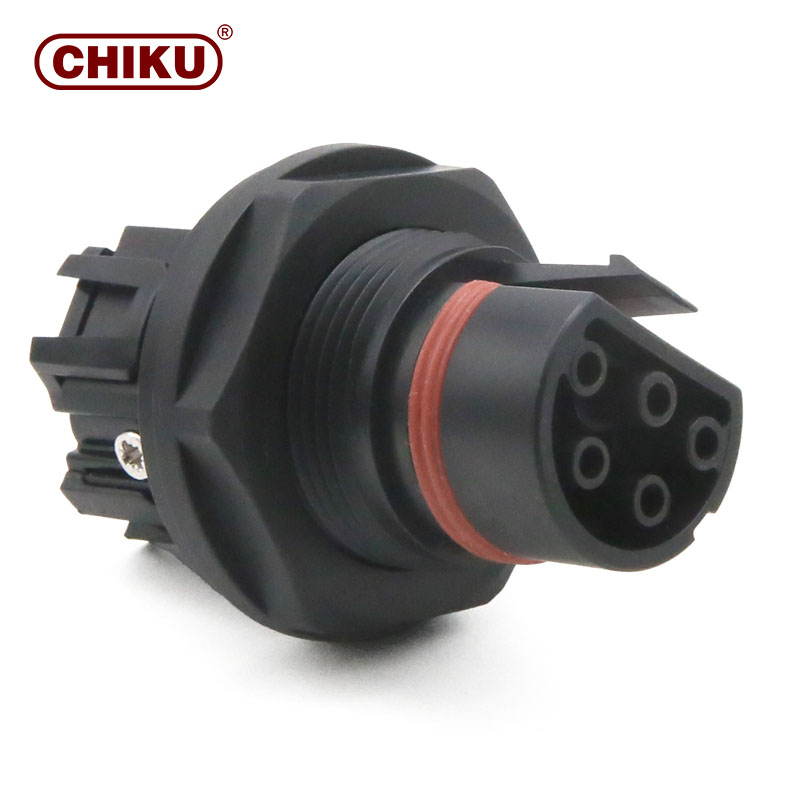
Energy connectors often face tough environmental conditions. Outdoor installations expose them to rain, dust, UV rays, and extreme temperatures. These factors can degrade materials, cause corrosion, or impair electrical contact. For example, connectors in solar farms must resist UV damage and moisture to maintain performance over years.
Durability is key. Connectors made from corrosion-resistant metals and UV-stable plastics last longer and reduce maintenance needs. Some connectors include seals or gaskets to keep out dust and water, achieving ratings like IP67 or IP68. These ratings indicate protection against dust ingress and water immersion, crucial for harsh environments.
Temperature fluctuations also challenge connectors. Materials must handle expansion and contraction without cracking or loosening. Connectors designed for high temperature ranges ensure safe operation in hot climates or near industrial equipment.
Proper installation is vital to connector performance. Incorrect wiring, loose connections, or improper torque can cause resistance, overheating, or failures. Installers should follow manufacturer guidelines closely and use the right tools.
Maintenance helps catch issues early. Regular inspections can reveal corrosion, wear, or damage. Cleaning contacts and tightening connections prevent energy loss and hazards. In large systems, maintenance schedules reduce downtime and extend connector life.
Some connectors feature modular designs allowing quick replacement without system shutdown. This reduces repair time and costs, especially in critical energy systems.
Technology drives improvements in energy connectors. New materials offer better conductivity and durability. Innovations include connectors with built-in sensors that monitor temperature, current, or connection status, enabling predictive maintenance.
Future connectors may integrate smart communication protocols, allowing real-time system diagnostics and remote monitoring. This helps optimize energy flow and detect faults early.
Trends also focus on standardization to improve interoperability between different manufacturers and systems. This simplifies upgrades and expansions, supporting the growth of renewable energy and storage networks.
Wireless or contactless connectors are emerging concepts, aiming to reduce wear and increase safety by eliminating physical contact points.
Energy connectors are crucial for efficient and safe power transfer across various applications, including renewable energy systems and industrial setups. They enhance system reliability and safety while supporting modularity and interoperability. As technology advances, connectors will integrate smart features, improving energy management. Huntec offers cutting-edge energy connectors that deliver exceptional durability and performance, meeting diverse energy needs. By choosing Huntec, customers gain reliable, scalable solutions that ensure optimal energy flow and system longevity in challenging environments.
A: An energy connector is a device that links different parts of an energy system, allowing electrical power to flow efficiently and safely between components, such as energy sources, storage units, and consumption points.
A: Energy connectors enhance efficiency and safety in renewable energy systems by ensuring smooth power flow, reducing resistance, and preventing disconnections. They support modular designs, allowing easy system expansion and integration into the grid.
A: Locking mechanisms secure connections, preventing accidental disconnections that could interrupt power flow or cause safety hazards, especially in environments with vibrations or movement.
A: The cost of energy connectors depends on their type, material quality, current and voltage ratings, environmental resistance features, and any advanced capabilities like integrated sensors or communication protocols.
A: Energy connectors are specifically designed to handle varying voltage and current levels, environmental conditions, and safety standards required in complex energy systems, whereas traditional connectors may not meet these specialized requirements.


