
Views: 182 Author: Site Editor Publish Time: 2025-10-03 Origin: Site


Optocoupler relays, also known as solid-state relays with optical isolation, are critical components in modern electronic systems. They combine the functionality of a conventional relay with the benefits of optoelectronic isolation, enabling signal transmission without direct electrical contact. This feature makes them indispensable in systems where electrical isolation is essential to protect sensitive components or to avoid noise interference. Unlike mechanical relays, optocoupler relays exhibit faster switching times, higher reliability, and longer operational lifespans, making them suitable for high-frequency applications.
The design of an optocoupler relay typically involves a light-emitting diode (LED) and a photodetector, which may be a phototransistor, photodiode, or photothyristor. When an input voltage is applied, the LED emits light that activates the photodetector, which in turn triggers the output circuit. This configuration allows for precise control while maintaining complete electrical isolation between the input and output. This intrinsic property significantly reduces the risk of damage to delicate circuits caused by high voltages or voltage spikes, which are common in industrial and power systems.
Moreover, the compact size of optocoupler relays allows integration into small-scale electronic devices without occupying significant space. They are also less susceptible to mechanical wear and tear since they contain no moving parts. This combination of electrical safety, reliability, and durability makes them an ideal choice in both industrial and consumer electronics environments.
Optocoupler relays are widely used across various industries due to their unique ability to provide electrical isolation and rapid switching capabilities. Their applications span industrial automation, consumer electronics, medical equipment, and renewable energy systems.
In industrial automation, optocoupler relays are employed in programmable logic controllers (PLCs), motor controllers, and process control systems. They ensure that control signals from low-voltage circuits can safely switch high-power loads without introducing electrical noise or voltage spikes into the control system. For example, in conveyor belt systems or robotic assembly lines, these relays isolate the control electronics from the high-current motors, reducing the risk of equipment failure and increasing overall system longevity.
Medical devices require stringent safety standards, and optocoupler relays are ideal for meeting these requirements. They isolate patient-facing electronics from the main power supply, minimizing the risk of electrical shock. Devices such as ventilators, ECG machines, and infusion pumps rely on optocoupler relays to maintain consistent operation while adhering to medical safety standards. Their ability to operate without mechanical contact ensures silent operation, which is particularly valuable in patient monitoring equipment where noise reduction is critical.
In solar power inverters and wind turbines, optocoupler relays play a vital role in isolating control circuitry from high-voltage power lines. This isolation not only ensures safety for maintenance personnel but also enhances the stability of the energy conversion system. Rapid switching capabilities help manage load variations efficiently, reducing energy loss and preventing damage to sensitive components.
Optocoupler relays provide several advantages over traditional mechanical relays, making them a preferred choice for many modern applications.
Electrical Isolation: The primary benefit is electrical isolation between control and load circuits. This protects sensitive electronics from voltage surges and spikes.
High-Speed Switching: Unlike mechanical relays, optocoupler relays can operate at extremely high frequencies, supporting applications requiring rapid signal switching.
Long Lifespan: Without moving parts, the wear-and-tear associated with mechanical contacts is eliminated, resulting in longer operational life.
Noise Reduction: Optical isolation significantly reduces electromagnetic interference (EMI) and radio-frequency interference (RFI), ensuring cleaner signal transmission.
Compact Design: Small form factors allow integration into miniaturized electronic devices without sacrificing performance.
The combination of these advantages makes optocoupler relays particularly useful in high-precision and safety-critical applications, where reliability and performance are paramount.
Understanding the technical specifications of optocoupler relays is essential for selecting the right model for a given application. The table below summarizes some key specifications:
| Specification | Description |
|---|---|
| Input Voltage | The voltage required to activate the internal LED |
| Output Current | Maximum current the relay can switch |
| Isolation Voltage | Maximum voltage the relay can withstand between input and output |
| Switching Speed | Time required to switch on/off, typically in microseconds |
| Operating Temperature | Temperature range within which the relay can function reliably |
| Load Type Compatibility | AC or DC load types that the relay can safely control |
These specifications must be carefully matched to the application to ensure optimal performance. For instance, selecting a relay with insufficient isolation voltage could risk damaging sensitive control circuits, while inadequate switching speed may fail in high-frequency applications.
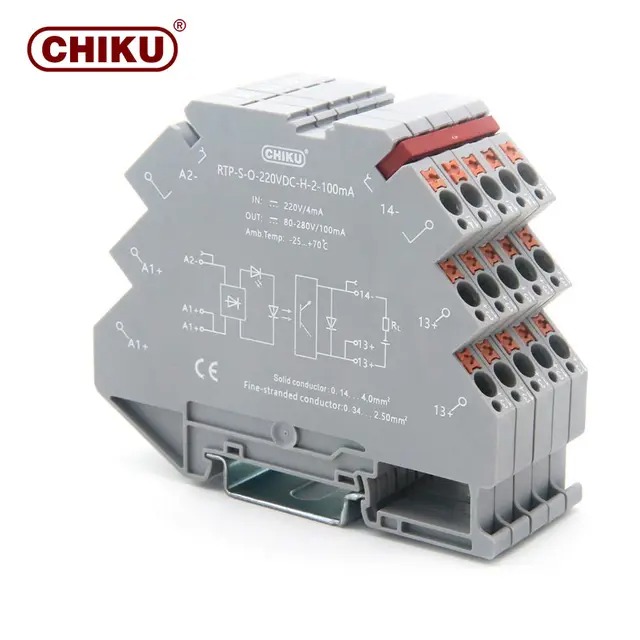
Yes, many optocoupler relays are designed to handle both AC and DC loads. However, it is critical to verify the relay's load type compatibility, as some models are optimized for one type of current only. Using a relay outside its intended specification can reduce lifespan or cause malfunction.
The key difference lies in the switching mechanism. Mechanical relays rely on physical contacts that open and close, while optocoupler relays use optical isolation without moving parts. This makes optocoupler relays faster, more reliable, and less prone to wear and noise interference.
The isolation voltage should exceed the maximum voltage expected in your system to ensure safety and prevent electrical breakdown. Industry standards and manufacturer datasheets usually provide recommended isolation voltage ranges for specific applications.
Implementing optocoupler relays effectively requires attention to design considerations that optimize performance and ensure safety:
Proper Heat Management: Although optocoupler relays generate less heat than mechanical relays, high-current applications may still require heat sinks or thermal management solutions.
Circuit Protection: Incorporate appropriate fuses, diodes, or surge protectors to safeguard both the relay and the control system.
Signal Conditioning: Ensure that the input control signals are within the specified voltage range to avoid overdriving the internal LED.
Environmental Considerations: Choose relays rated for the operational temperature and humidity conditions of the application to maintain reliability.
By adhering to these best practices, engineers can maximize the operational life, reliability, and efficiency of their systems using optocoupler relays.
Optocoupler relays are versatile and indispensable components in modern electronic and industrial systems. Their unique combination of electrical isolation, high-speed switching, and durability makes them suitable for applications ranging from industrial automation and medical equipment to renewable energy systems. Understanding their specifications, advantages, and best practices ensures that these relays can be used effectively to enhance system reliability and safety.
By integrating optocoupler relays thoughtfully, engineers can achieve superior performance, reduce maintenance requirements, and protect sensitive circuits from electrical hazards. The careful selection and application of these relays are crucial to realizing their full potential, making them a cornerstone of advanced electronic and control systems.


