
Views: 0 Author: Site Editor Publish Time: 2025-07-23 Origin: Site


Terminal blocks are essential components in electrical and electronic systems. These modular devices serve to connect and secure wires, providing both a mechanical and electrical connection. But when it comes to their specific role, there is often confusion about whether terminal blocks are inputs or outputs. This article will delve deep into terminal blocks, their types, functions, and applications, as well as address the fundamental question: Is a terminal block input or output?
A terminal block is a device used to connect and secure electrical wires in a circuit. These blocks are often found in various industrial, commercial, and residential settings, providing a safe and organized means of terminating wire connections. Terminal blocks come in many shapes, sizes, and designs to accommodate different types of wiring needs.
At its core, a terminal block consists of a housing that holds a set of electrical contacts, which are connected to wires through screws or spring mechanisms. The block ensures that these connections are secure and that the circuit remains functional. It acts as a junction point where multiple wires are connected to a common point, or where wires can be connected to devices, equipment, or other parts of a circuit.
The functionality of a terminal block often depends on its design, and it plays a key role in preventing circuit faults, reducing short circuits, and ensuring stable operation by providing secure connections.
Terminal blocks serve several vital functions in a circuit:
Wire Termination: They provide a secure connection point for wires, reducing the chance of poor connections or short circuits.
Wire Organization: They help keep wires neatly organized and prevent tangling or crossing, which can lead to electrical hazards.
Segmentation of Circuits: In more complex systems, terminal blocks allow for easy circuit segregation, making maintenance and troubleshooting simpler.
Protection: Some terminal blocks come with built-in insulation and protection features to prevent electrical shock or short circuits.
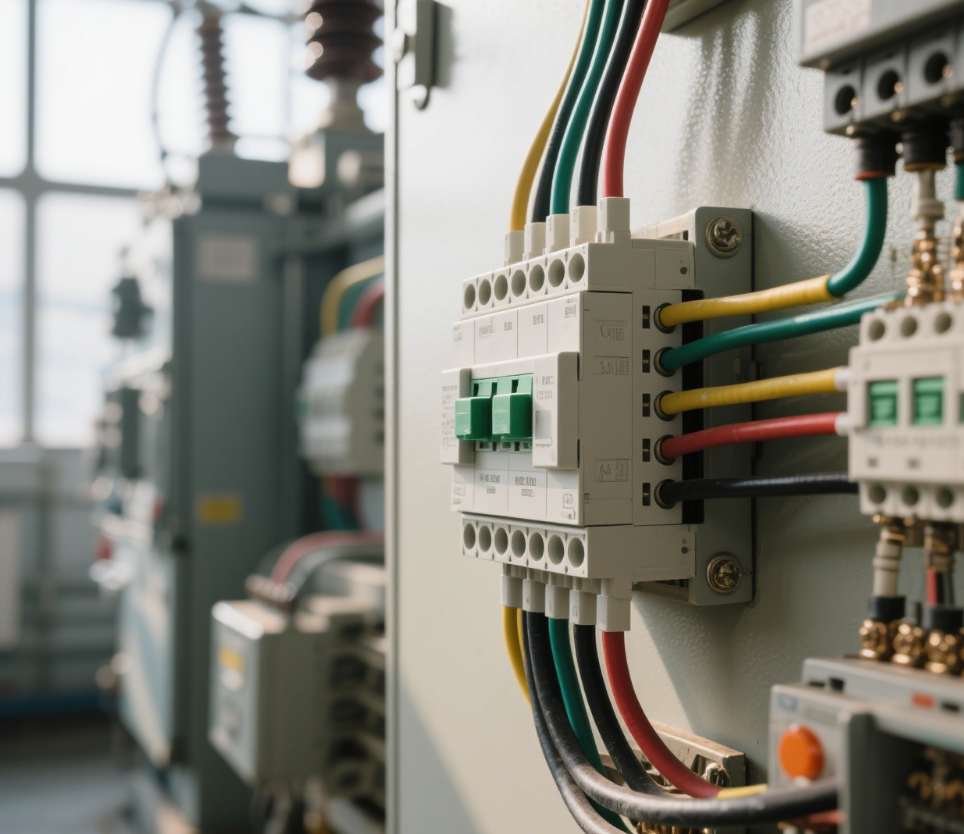
There are different types of terminal blocks, each designed for specific applications. Let's explore some of the most common types:
A terminal block connector is typically used for the connection of wires. These connectors are crucial for providing a safe and reliable electrical connection. A common feature of these connectors is that they often allow for a secure and tight connection by means of a screw that holds the wire in place.
These connectors are widely used in a variety of applications, including industrial machinery, automotive, and telecommunications systems, to ensure proper wiring and secure connections.
A screw terminal block is a type of terminal block that uses screws to secure the wire to the block. It is one of the most common and widely used types due to its simplicity and reliability. The wire is placed under a metal clamp or plate, and the screw is tightened to secure the wire in place.
These blocks are used in applications where a firm and stable connection is required. They are commonly found in control panels, machinery, and other industrial systems. Screw terminal blocks can handle various wire sizes and offer high durability.
A spring terminal block uses a spring mechanism to secure the wire in place. Unlike screw terminal blocks, spring terminal blocks do not require screws to tighten the wire. Instead, the spring mechanism holds the wire securely, making it easier and faster to install and maintain.
Spring terminal blocks are often preferred in situations where quick and frequent changes to wiring may be necessary, such as in electronic devices and communication systems.
A barrier terminal block is designed with barriers between each connection point, providing isolation between different terminals. This type of terminal block is often used in high-voltage or complex circuits to prevent short circuits between connections.
Barrier terminal blocks are ideal for applications where a high degree of safety and separation between circuits is required. They are commonly used in power distribution, industrial automation, and other settings where multiple high-power circuits are connected together.
Now, we arrive at the core question: Is a terminal block an input or output?
The short answer is that terminal blocks can be used for both inputs and outputs, depending on the configuration and purpose of the circuit they are part of.
When terminal blocks are used to receive signals or electrical power, they function as input. In this configuration, wires are connected to the terminal block, which then allows the current to flow into the device or system it is connected to. For example, a terminal block might be used to receive power from a power supply or to receive data signals from an external device.
On the other hand, when terminal blocks are used to send signals or electrical power to other components or devices, they function as output. In this configuration, the terminal block is part of a circuit where it delivers power or data to other systems or devices. For instance, a terminal block could be used to connect an output device like a motor or light to a power supply.
Many terminal blocks can serve both input and output roles in different parts of the same circuit. For example, in a complex system, a terminal block might receive input from a power supply at one point and send output to a load, such as a motor, at another. This versatility makes terminal blocks a fundamental component in modern electrical systems.
The versatility of terminal blocks makes them suitable for a wide range of applications, including:
In industrial control systems, terminal blocks are used to connect various parts of the machinery and control panels. They help route power to motors, sensors, and other devices that are essential for automation processes.
In power distribution systems, terminal blocks are used to secure power lines, connecting transformers, circuit breakers, and other electrical equipment. These systems require high levels of safety, and barrier terminal blocks are often used to prevent electrical shorts between the power lines.
Terminal blocks are also found in telecommunication equipment, where they help manage signal transmission and distribution. They are crucial for the organization and maintenance of wiring in complex communication networks.
In residential, commercial, and industrial buildings, terminal blocks are used in electrical panels to manage and organize wiring systems. They ensure secure and efficient connections, making maintenance and upgrades easier.
The key difference between screw and spring terminal blocks lies in how the wire is secured. Screw terminal blocks use screws to tighten and secure the wire, providing a firm connection, while spring terminal blocks use a spring mechanism to hold the wire in place, making them quicker and easier to install.
Yes, barrier terminal blocks are specifically designed for high-voltage applications. These blocks have barriers between each connection point to ensure safety and prevent short circuits. They are commonly used in power distribution and industrial automation systems.
Yes, terminal blocks are generally reusable. Both screw and spring terminal blocks allow for the removal and reinstallation of wires, making them suitable for systems that require maintenance or updates.
Choosing the right terminal block depends on factors such as the voltage and current requirements, the number of wires to be connected, and the specific environment where the terminal block will be used. For high-voltage systems, barrier terminal blocks may be ideal, while spring terminal blocks are better suited for quick and easy installation.
Terminal blocks are typically made from durable materials like plastic or metal. The housing is often made from polycarbonate or other insulating materials, while the contact pins are usually made from copper or other conductive metals.
Terminal blocks play a crucial role in the organization and safety of electrical circuits. Whether acting as inputs, outputs, or both, these devices help ensure the efficient and secure connection of wires, facilitating the operation of various electrical systems. Understanding their types, functions, and applications can help you select the right terminal block for your specific needs.


